


Posted on 11 Dec
In recent years, Europe has witnessed a remarkable evolution in the world of interior design, public art, and architectural creativity. Among the many artistic mediums gaining attention, fiberglass art has emerged as one of the most influential forces in modern European aesthetics. As we step into 2025, fiberglass sculptures, murals, installations, and décor elements have become top choices for designers, commercial developers, curators, and homeowners alike.
But what exactly is driving this surge in demand? Why is fiberglass art experiencing massive popularity across Europe?
Let’s explore the cultural, aesthetic, and functional reasons behind this growing trend.
1. Fiberglass Offers Unmatched Versatility for European Design Trends
Europe is a mosaic of architectural styles – from minimalist Scandinavian interiors to the luxurious elegance of French, Italian, and Spanish décor. Fiberglass fits effortlessly into every design theme due to its incredible versatility.
How fiberglass adapts to various European styles:
-
Scandinavian minimalism: Clean, smooth finishes and organic shapes align perfectly with Nordic simplicity.
-
Mediterranean interiors: Fiberglass can mimic textures like stone, wood, and ceramic effortlessly.
-
Modern industrial spaces: Sharp lines, geometric shapes, and bold large-scale pieces make fiberglass ideal.
-
Classical European themes: Sculptures resembling marble or bronze can be crafted at a fraction of the weight and cost.
This adaptability makes fiberglass the go-to material for designers aiming to create custom pieces that match Europe’s diverse interior styles.
2. Growing Demand for Lightweight but Durable Art
One of the biggest practical advantages of fiberglass is its excellent strength-to-weight ratio. Europe’s residential buildings, commercial towers, and public facilities often require artwork that is:
-
Easy to install
-
Safe for all environments
-
Resistant to damage
-
Capable of lasting decades
Fiberglass checks all these boxes.
Why durability matters in Europe:
Europe experiences a wide range of climates—from the cold Nordic regions to Mediterranean humidity. Fiberglass withstands moisture, UV exposure, temperature fluctuations, and daily wear far better than traditional materials like clay, wood, or metal.
As a result, hotels, museums, public parks, universities, and shopping centers across Europe increasingly prefer fiberglass installations for both indoor and outdoor settings.
3. Perfect for Large-Scale Public Art Installations
European cities are heavily investing in public art to enrich cultural identity. Cities like Berlin, Barcelona, Paris, Amsterdam, and Lisbon are known for embracing modern and experimental artworks.
Fiberglass is the preferred material for public art because it allows:
-
Oversized sculptures without structural issues
-
Creative and unusual shapes
-
Cost-effective production
-
Longevity with low maintenance
Public plazas, metro stations, waterfronts, and corporate campuses are choosing fiberglass sculptures and 3D murals to create impactful visual experiences.
4. Explosion of Theme Parks, Resorts & Entertainment Spaces
Tourism is one of Europe’s strongest industries, and entertainment spaces across the continent are expanding their artistic investments.
Popular sectors embracing fiberglass art:
-
Theme parks in France, Spain, Germany, and the UK
-
Resorts & hotels in Greece, Italy, and the Canary Islands
-
Zoos, aquariums, and museums across Northern and Central Europe
-
Festival venues and event grounds
Fiberglass is ideal for themed environments because it can replicate:
-
Animals
-
Mythological figures
-
Characters
-
Decorative props
-
Architectural elements
This boom in themed attractions has fueled even more demand for custom fiberglass artwork.
5. Europe’s Sustainability Shift Supports Fiberglass Innovation
Europe has been at the forefront of environmental responsibility, and many artists and manufacturers are now exploring eco-friendly fiberglass options, such as:
-
Low-VOC resins
-
Recycled fiberglass materials
-
Energy-efficient production methods
Fiberglass’s longevity also contributes to sustainability because it reduces the need for frequent replacements.
As 2025 progresses, eco-conscious European buyers increasingly view fiberglass as a long-term, responsible art option—especially when compared to short-lived plastic or resource-intensive metals.
6. Cost-Effective Alternative to Traditional Materials
Europe has a rich history of marble, bronze, wood, and stone sculpture. But these materials come with significant challenges:
-
High cost
-
Heavy weight
-
Difficult transport
-
Limited flexibility
-
Complex installation
Fiberglass offers the same visual effect while reducing:
-
Production cost
-
Shipping expenses
-
Labor needed for installation
Municipalities, corporate clients, and hospitality businesses across Europe choose fiberglass because it delivers museum-level aesthetics without the financial burden of traditional sculpture materials.
7. Fiberglass Art Supports Europe’s Push Toward Customization
Modern European consumers—both homeowners and corporations—are increasingly seeking custom artwork instead of mass-produced items.
Why custom art is growing in Europe:
-
Strong culture of individuality
-
Growth of boutique restaurants and hotels
-
Increase in luxury home renovations
-
Rise of experiential retail spaces
Fiberglass allows artists to create fully customized pieces in any shape, size, texture, or style. This level of personalization aligns perfectly with Europe’s design-forward culture.
8. Advancement in European Art Technology & Manufacturing
By 2025, Europe’s art and design industries have integrated advanced tools such as:
-
3D modeling
-
CNC machining
-
Digital sculpting
-
Lightweight resin engineering
-
UV-stable color technologies
These advancements have improved the quality and precision of fiberglass art dramatically.
Manufacturers can now create hyper-realistic sculptures, intricate décor pieces, and large installation works with exceptional detail. This technological leap has further fueled demand.
9. Rising Popularity of Contemporary & Abstract Art
Across Europe, contemporary art movements are increasingly favoring abstract shapes, fluid designs, and innovative concepts. Fiberglass suits this trend perfectly.
Its flexibility allows artists to create:
-
Twisted forms
-
Free-flowing sculptures
-
Geometric patterns
-
Minimalist silhouettes
-
Futuristic installations
Art galleries, luxury apartments, and corporate spaces across Europe are integrating fiberglass art to reflect the continent’s modern artistic identity.
10. Improved Shipping & Logistics for European Buyers
One of the practical reasons behind fiberglass art’s rising popularity is improved shipping solutions. Since fiberglass is lighter and less fragile than stone or ceramic, it can be shipped more safely and at a much lower cost.
Manufacturers and exporters worldwide—including Asian suppliers—are now offering:
-
Strong export-grade packaging
-
Safety crates
-
Foam-based shock protection
-
Worldwide door-to-door delivery
-
Hassle-free customs paperwork
This has made it easier for European buyers to comfortably import fiberglass art for personal and commercial use.
Europe Embraces Fiberglass as the Future of Art & Design
Fiberglass art is not just a trend—it’s becoming a defining element of Europe’s 2025 creative landscape. With its unmatched versatility, durability, cost-effectiveness, and ability to adapt to diverse European cultures, fiberglass has transformed the way art is created and experienced.
From public installations in city squares, to luxury hotel lobbies, to stylish modern homes, fiberglass is shaping Europe’s visual identity in exciting new ways.
As the demand continues to rise, Europe is set to become one of the world’s largest markets for high-quality, custom fiberglass art.
Leave a Comment:
Categories
Popular Posts

Complete Guide to Buying Fiberglass Durga Idols for Malaysia
Durga Puja is celebrated with immense devotion and enthusiasm by Hindu and Bengali communities around the world. In Malaysia, temples, cultural associations, Bengali communities, and religious organiz
Read More →

The Growing Demand for Fiberglass Durga Idols in Malaysia
Durga Puja has evolved into one of the most significant cultural and religious celebrations for Hindu communities around the world. In Malaysia, where a vibrant Indian community has preserved its trad
Read More →

Fiberglass Durga Idol Export to the UK: A Complete Guide for Durga Puja Organizers
Durga Puja has become one of the most celebrated cultural and religious festivals among the Bengali community worldwide. In the United Kingdom, cities such as London, Birmingham, Manchester, Leicester
Read More →
Top Digital Strategies to Grow Your Art & Craft Export Business in 2026
The global demand for handcrafted products, decorative sculptures, home décor, fiberglass statues, garden ornaments, religious idols, and artistic installations continues to grow rapidly. Buyers from
Read More →
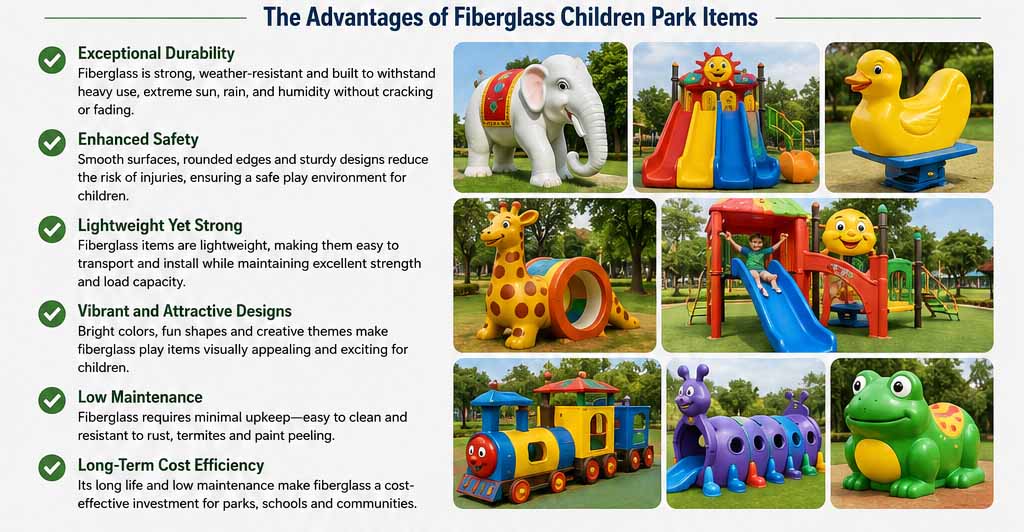
How Fiberglass Children Park Items Enhance Children’s Outdoor Activities
In today’s digital age, children are spending more time indoors than ever before. Smartphones, tablets, video games, and television often compete with outdoor play, reducing opportunities for physic
Read More →

Top 10 Durga Puja 2026 Trends Every Organizer Should Know
Durga Puja is more than just a religious festival—it's a celebration of creativity, culture, craftsmanship, and community. Every year, organizers strive to create unique experiences that attract vis
Read More →
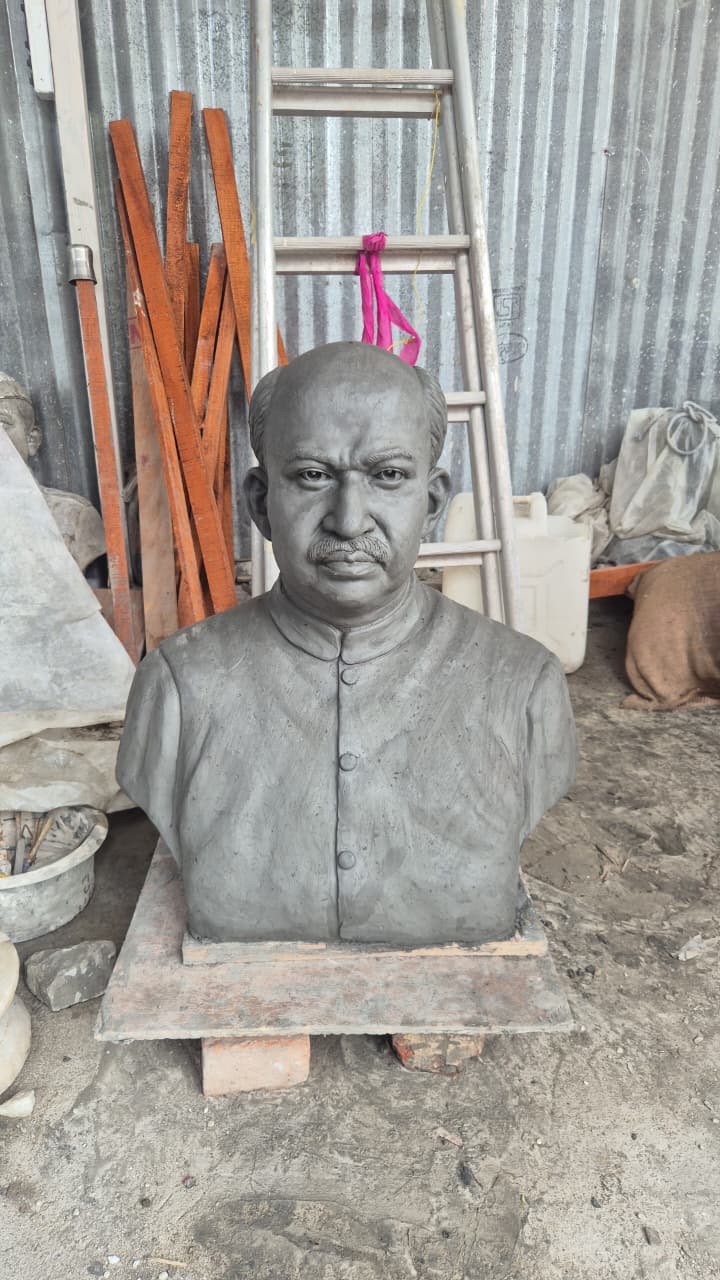
From Vision to Victory 2026: Honoring Dr. Syama Prasad Mookerjee Through Fiberglass Art
India's history is shaped by visionary leaders whose ideas continue to inspire generations long after their time. Among these influential figures, Dr. Syama Prasad Mookerjee occupies a special place.
Read More →
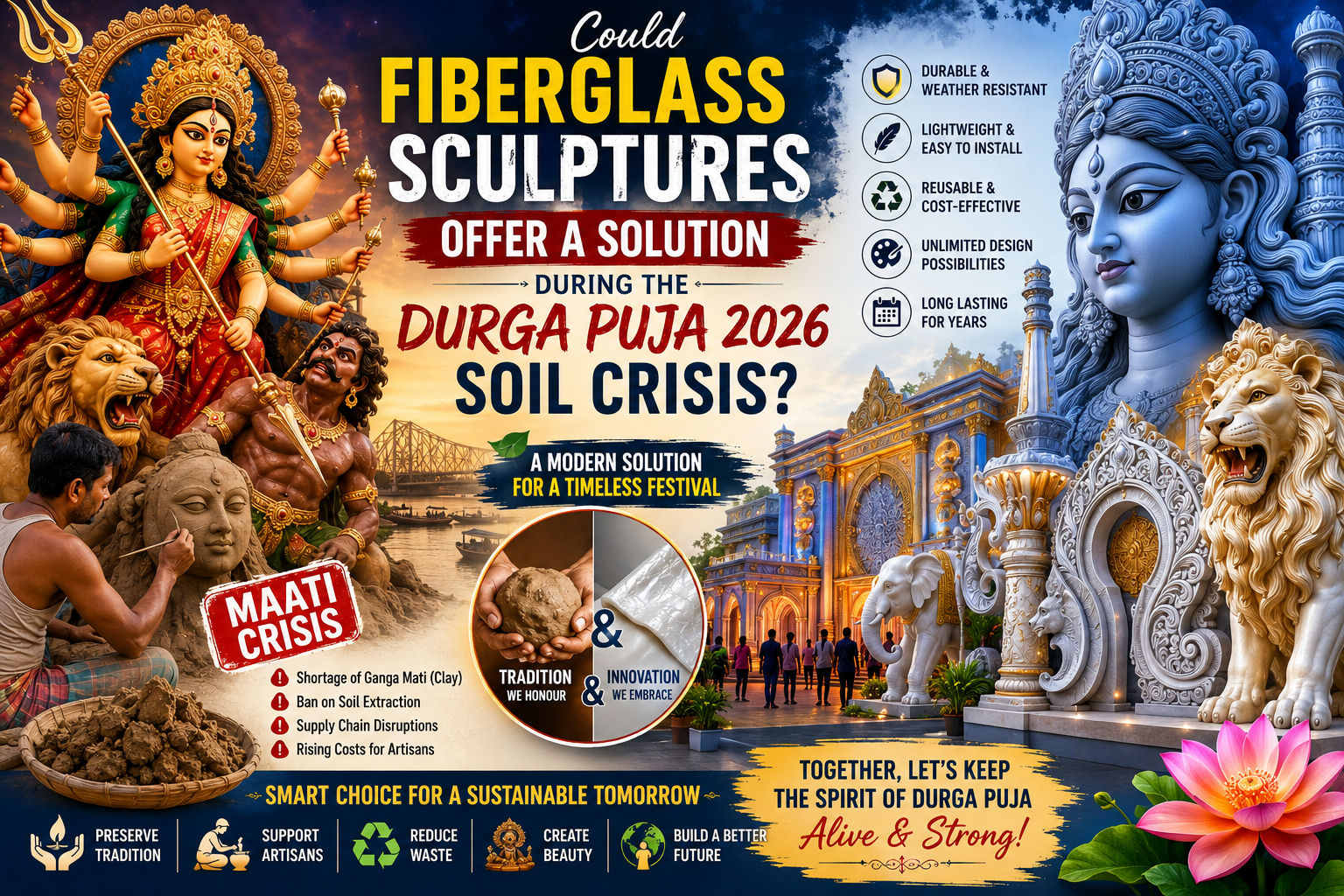
Could Fiberglass Sculptures Offer a Solution During the Durga Puja 2026 Soil Crisis?
Durga Puja is the cultural heartbeat of West Bengal. Every year, the festival brings together millions of devotees, artists, craftsmen, and visitors who celebrate the triumph of good over evil through
Read More →
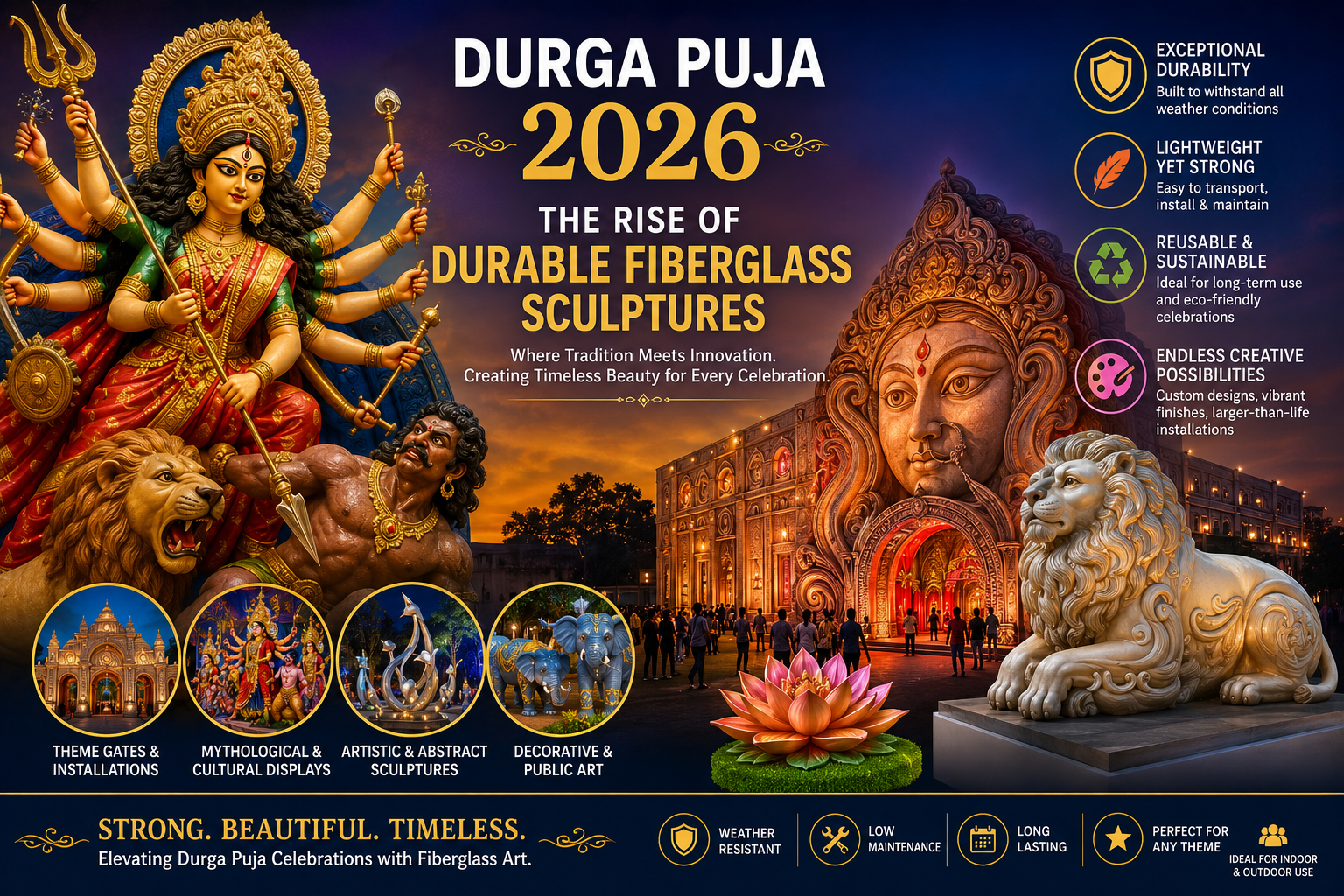
Durga Puja 2026: The Rise of Durable Fiberglass Sculptures
Durga Puja is more than a festival—it is a celebration of art, culture, devotion, and community. Every year, millions of devotees and visitors gather to admire magnificent idols, creative pandals, a
Read More →
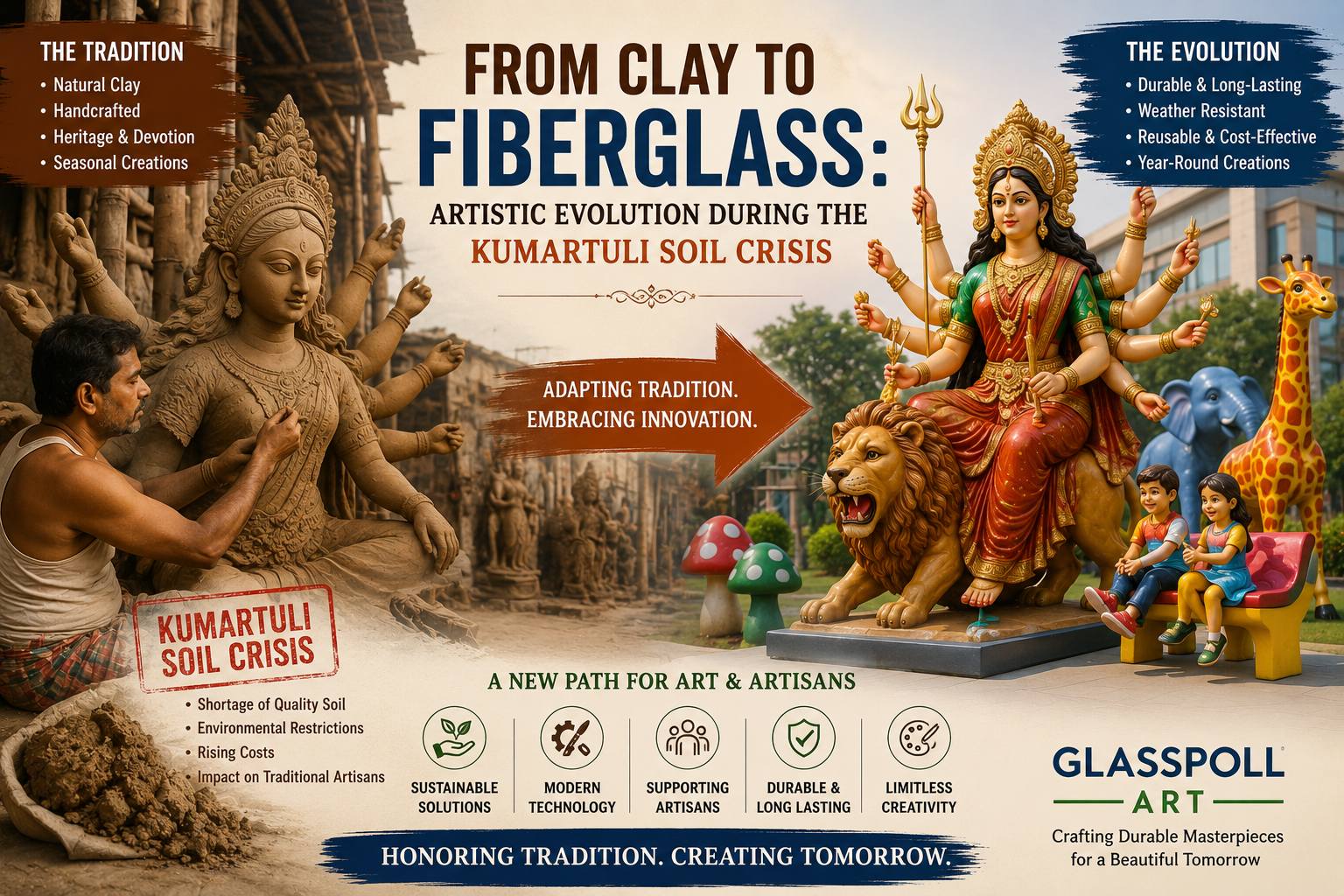
From Clay to Fiberglass: Artistic Evolution During the Kumartuli Soil Crisis
For centuries, Kumartuli has stood as the artistic heart of Kolkata. Known worldwide for its skilled idol makers and traditional craftsmanship, this historic neighborhood has played a major role in pr
Read More →
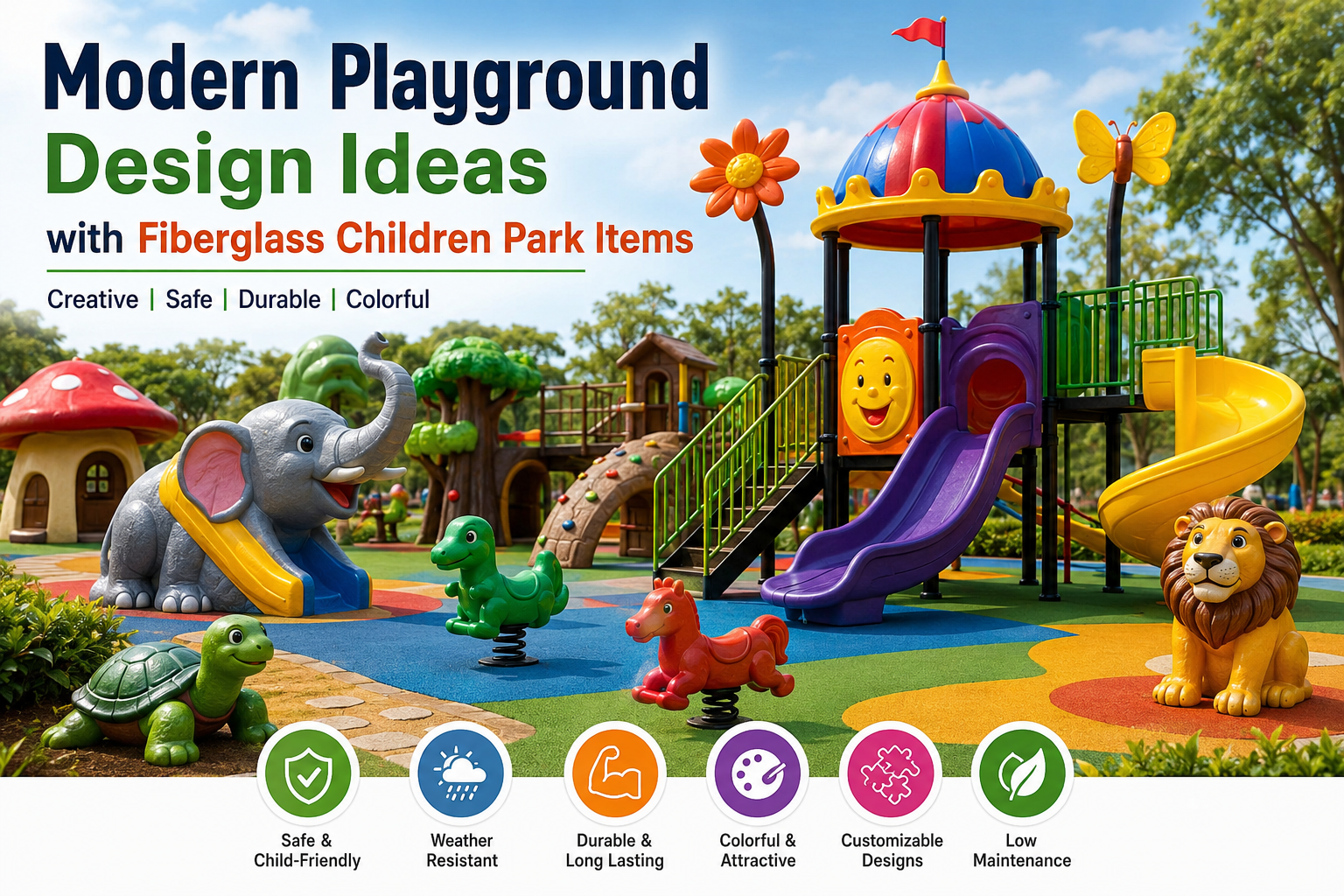
Modern Playground Design Ideas with Fiberglass Children Park Items
Playgrounds have evolved far beyond simple swings and slides. Today’s modern playgrounds are designed to encourage creativity, physical activity, social interaction, and imaginative play. Whether it
Read More →

A Complete Buyer’s Guide to Fiberglass Durga Idols
Durga Puja is more than a festival—it’s a celebration of devotion, artistry, and cultural heritage. Traditionally, idols of Maa Durga were crafted from clay, symbolizing a return to nature. Howeve
Read More →

Large Fiber Nutcracker Statue: Make a Bold Holiday Statement
The holiday season is all about creating magical, memorable experiences. From twinkling lights to grand Christmas trees, festive décor has the power to transform ordinary spaces into enchanting wonde
Read More →

Fiber Nutcracker Statue: A Durable and Elegant Festive Decoration
When the holiday season arrives, decorations transform ordinary spaces into magical experiences. Among the most iconic symbols of Christmas charm and tradition stands the nutcracker. While traditional
Read More →

7 Expert Tips for Choosing the Perfect Fiberglass Durga Idol
Durga Puja is not just a festival—it's a deep spiritual and cultural expression of devotion, art, and tradition. In recent years, fiberglass Durga idols have grown in popularity due to their lightwe
Read More →

How Glasspoll Art Ensures Quality in Every Fiberglass Sculpture
Fiberglass sculptures are not just decorative pieces—they are a blend of artistry, craftsmanship, and precision engineering. At Glasspoll Art, we take immense pride in delivering high-quality, dur
Read More →

Glasspoll Art: Leading Manufacturer and Exporter of Fiberglass Durga Idols
Durga Puja, one of the most celebrated festivals in India, is a time of devotion, cultural vibrancy, and artistic splendor. At the heart of these celebrations are the magnificent Durga idols, which sy
Read More →
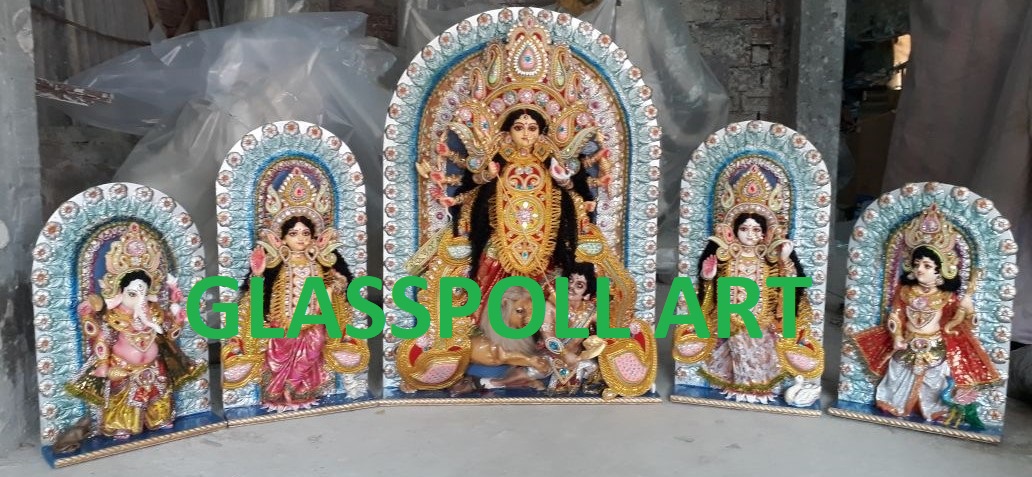
Revolutionizing Tradition: The Journey from Clay to Fiberglass Durga Idols
Durga Puja, the grand festival celebrating the triumph of good over evil, holds a special place in the hearts of Bengalis, and no other city captures the essence of this celebration quite like Kolkata
Read More →

Fiber children sculpture
Over the last couple of years, Fiber children sculptures are in high demand. These statues are perfect option to décor a place. You can place the statue inside and outside in a children’s park, p
Read More →
0-N
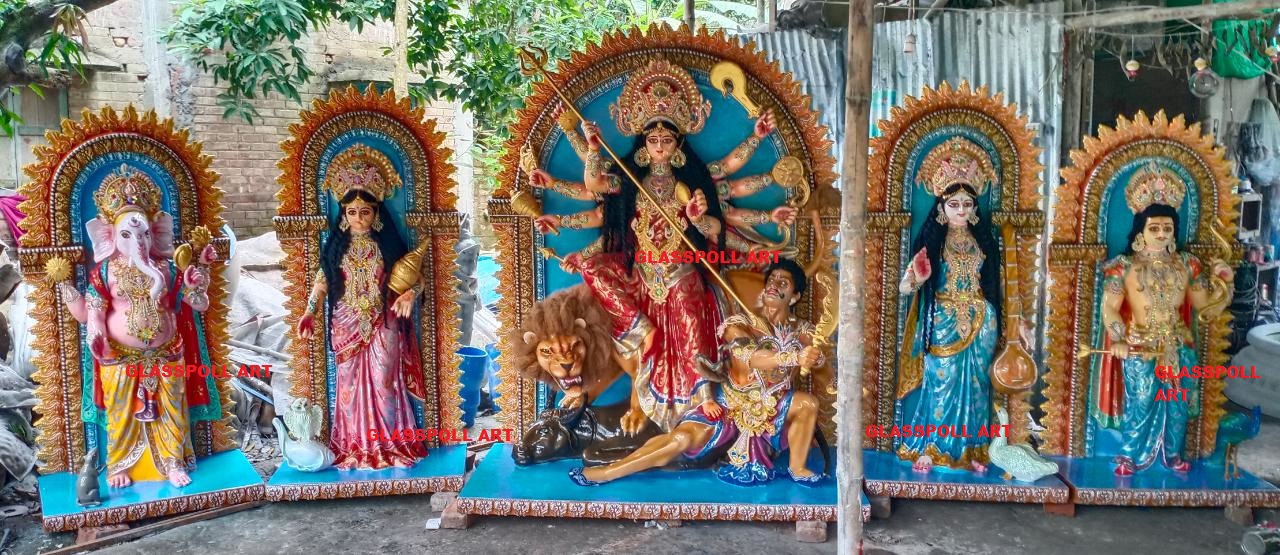
The True Essence of Durga Puja:Durga Puja is just not only a festival, it’s a heartfelt emotion for all Bengalis who live in abroad. It doesn’t matter; if a Bengali lives in UK, USA or North Ameri
Read More →

Fiberglass Durga Idol
Why To Choose Fiberglass Durga Idols Made by Glasspoll Art? Durga Puja is undoubtedly the most glorious festival in West Bengal and for Bengalis. This greatest festival of autumn allows every B
Read More →

Hemanta Mukherjee Silicon Statue
The Indian Music Industry is truly endowed with some legendary personalities for watch till now Indian songs; music, films are quite popular in the world. There are many personalities time to time wer
Read More →
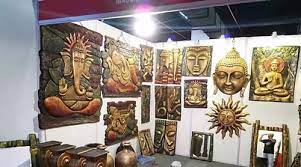
Fiberglass Wall hanging
Without any doubt, adding beautiful wall hanging can define a space in a different way. You can set a mood or colorful vibes to any style of the room. This is what makes the wall hanging unique and be
Read More →
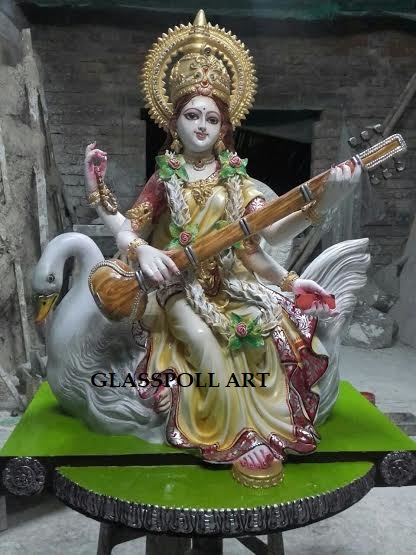
Fiberglass Saraswati statue
“Ya Kundendu Tusharahara Dhavala Ya Shubhra VastravritaYa Veena Varadanda Manditakara Ya Shveta PadmasanaYa Brahmachyuta Shankara Prabhritibhir Devaih Sada PujitaSa Mam Pattu Saravatee Bhagavatee Ni
Read More →

Fiberglass thinking woman statue
Human being always believes in the power of art, creativity, and ability to open people’s heart and minds. Public art or creation has the capability to teach us, inspire us, or just to make us smile
Read More →