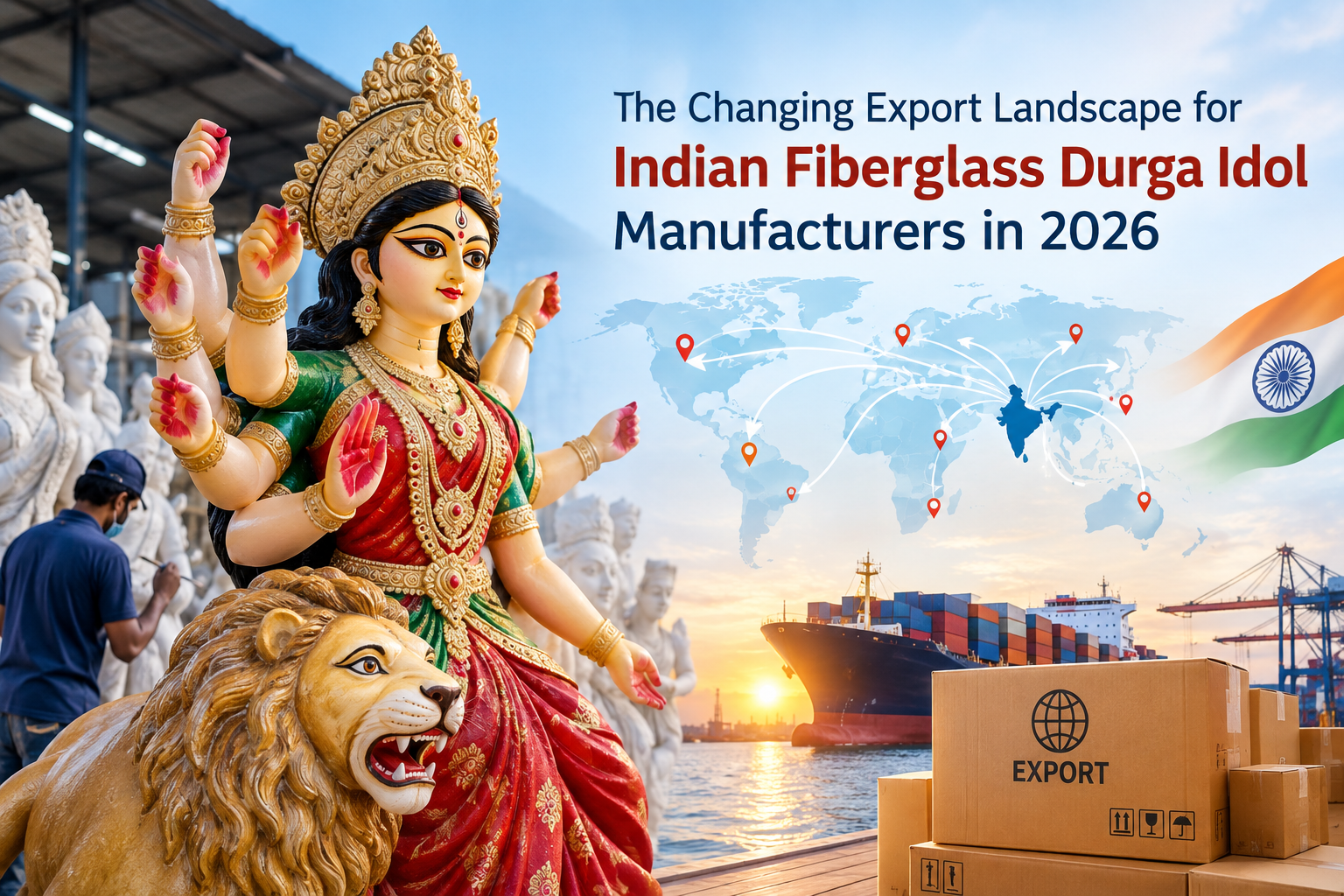
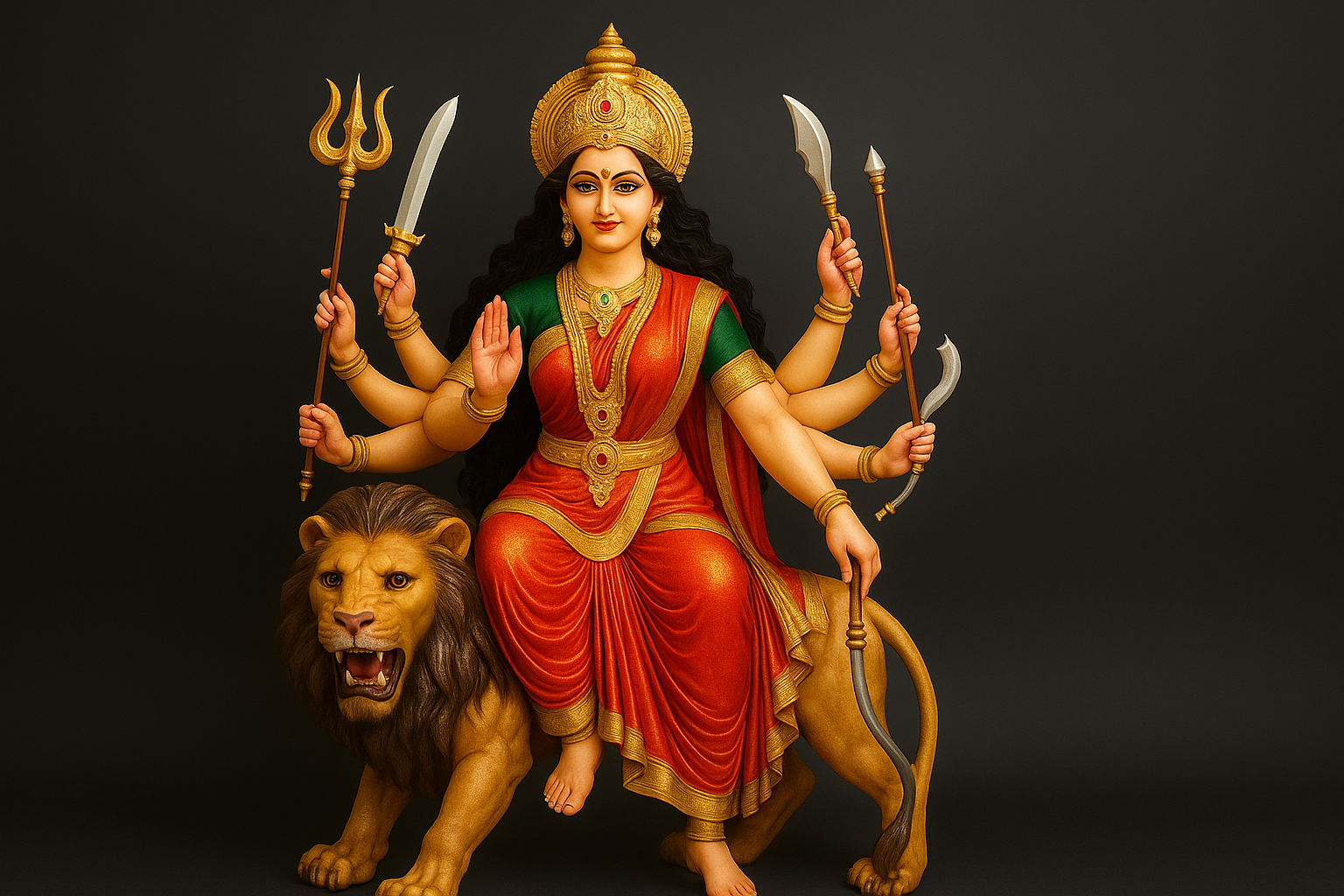
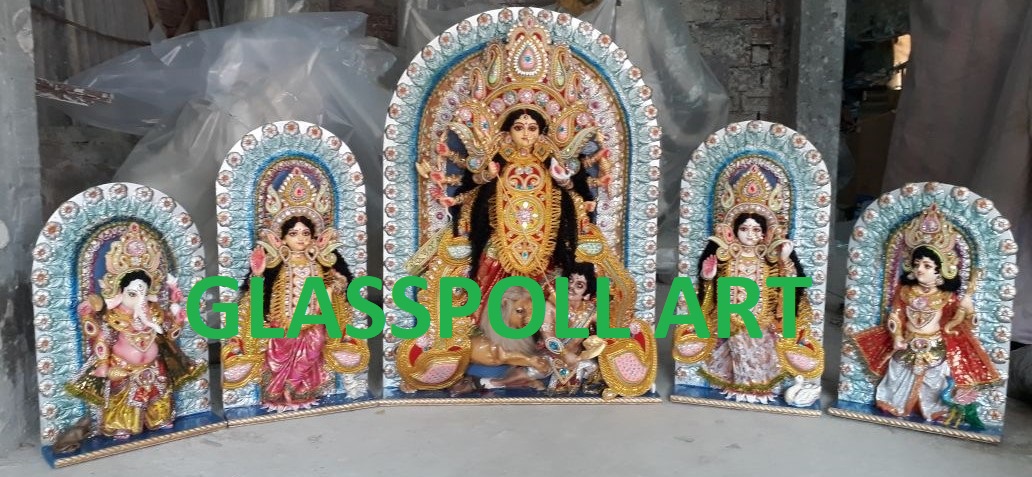
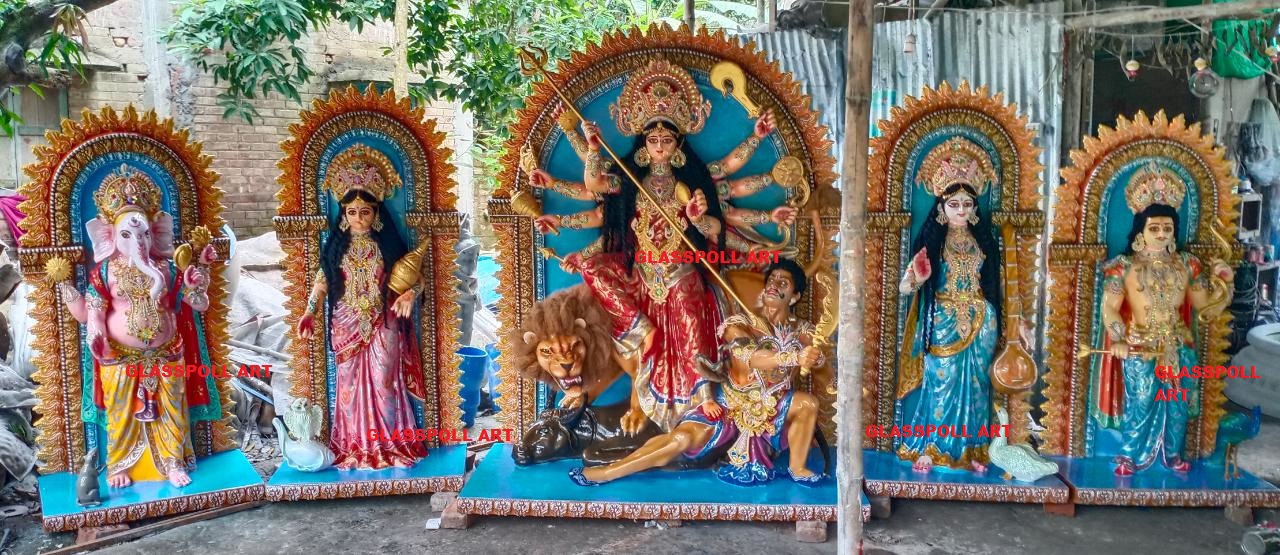
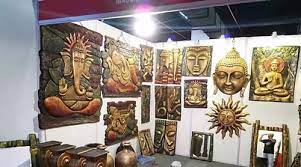
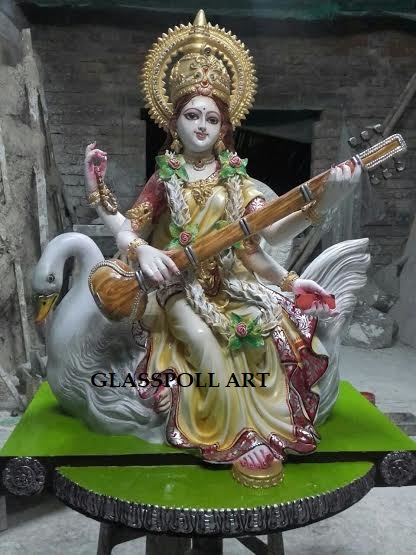
India has a long tradition of sculpture, handicrafts and religious art. In recent years, this traditional expertise has increasingly connected with international demand for durable, lightweight and customized religious sculptures. Among these products, fiberglass Durga idols have become an important option for organizers and community groups looking for reusable sculptures that can be transported across borders.
For Indian fiberglass Durga idol manufacturers, however, the export market in 2026 is changing. International trade policies, tariffs, shipping costs, customer expectations, digital marketing and competition are all influencing how manufacturers approach overseas markets.
At the same time, India's overall export performance remains significant. According to India's Ministry of Commerce and Industry, merchandise exports reached an estimated US$43.81 billion in August 2026, up from US$34.74 billion in August 2025. Cumulative merchandise exports during April–August 2026–27 were estimated at US$215.91 billion, an increase of 17.85% over the corresponding period of the previous year.
For fiberglass Durga idol manufacturers, this changing environment creates both challenges and opportunities.
1. Growing International Interest in Indian Fiberglass Sculptures
Indian manufacturers have an important advantage: they combine traditional artistic knowledge with modern materials and manufacturing techniques.
Fiberglass, also known as FRP or fiber-reinforced plastic, can be used to create detailed sculptures while offering several practical benefits:
-
Lightweight compared with many traditional materials
-
Strong and durable
-
Suitable for transportation
-
Resistant to moisture when properly manufactured and finished
-
Reusable for multiple years
-
Suitable for customized designs
-
Easier to store after a festival
-
Available in different sizes and finishes
These characteristics can make fiberglass idols particularly suitable for overseas Durga Puja communities.
Indian communities in countries such as the United Kingdom, Malaysia, the United States, Australia and other parts of the world organize cultural and religious events where authentic Indian artistic products are required.
For manufacturers, this means the opportunity is no longer limited to the domestic market.
2. The US Market Is Becoming More Complex
The United States remains an important destination for Indian exports, but 2026 has demonstrated why exporters need to monitor international trade policy carefully.
In February 2026, the United States and India announced a framework for an Interim Agreement. The White House stated that the framework included an 18% reciprocal tariff rate for originating goods from India, covering categories including home décor and artisanal products, subject to the terms described in the agreement.
There have also been subsequent changes in U.S. trade measures. In July 2026, the U.S. announced a 10% Section 301 tariff on goods from India under measures related to forced-labour import prohibitions, with specified exclusions and other tariff provisions. India's Ministry of Commerce said approximately 45% of India's exports to the U.S. remained outside that additional Section 301 duty because of exemptions or other measures.
Importantly, exporters should not assume that every fiberglass Durga idol automatically carries one particular tariff rate. The actual U.S. duty treatment depends on the product's classification, applicable tariff provisions, origin and other customs circumstances.
Therefore, an Indian fiberglass idol manufacturer planning U.S. exports should work with the importer, customs broker or trade professional to verify the correct HS/HTS classification and applicable duties before quoting a final landed price.
3. Exporters Need to Think Beyond One Market
One of the most important developments in the 2026 export landscape is the value of market diversification.
A manufacturer that depends almost entirely on one international market can become vulnerable when:
-
Import duties change
-
Shipping costs increase
-
Currency values fluctuate
-
Customs requirements change
-
Demand changes
-
Political or trade relations affect market access
For fiberglass Durga idol manufacturers, markets such as the UK, Malaysia, Australia, Singapore, Canada and other countries with established Indian communities can therefore be explored alongside the United States.
This does not mean abandoning existing markets. Instead, manufacturers can build a broader export strategy where several international markets contribute to overall business growth.
4. The UK Can Be an Important Market for Fiberglass Durga Idols
The United Kingdom has a large Indian-origin community and numerous cultural and religious organizations.
For a fiberglass Durga idol manufacturer, the UK market can offer opportunities for:
-
Durga Puja committees
-
Bengali associations
-
Indian cultural organizations
-
Community halls
-
Hindu temples
-
Cultural event organizers
-
Private collectors and institutions
However, successful UK exports require more than simply producing an attractive idol.
Manufacturers need to consider packaging, dimensions, shipping arrangements, installation requirements and communication with the importing organization.
A professional exporter should provide customers with clear information about:
Idol dimensions → Weight → Material → Packaging → Shipping method → Delivery timeline → Installation requirements → Storage instructions
Providing this information before the order can make the purchasing process easier for international customers.
5. Malaysia and Southeast Asia Offer Another Opportunity
Malaysia is another market where Indian cultural communities create potential demand for religious sculptures and festival-related products.
Fiberglass can be especially useful for international customers because large sculptures need to be transported, handled and stored carefully.
Manufacturers targeting Malaysia can develop dedicated product pages such as:
-
Fiberglass Durga Idol Malaysia
-
Fiberglass Durga Idol Exporter
-
Durga Idol Manufacturer India
-
FRP Durga Idol Malaysia
-
Custom Fiberglass Durga Statue
-
Indian Fiberglass Sculpture Exporter
Such pages can help international customers discover manufacturers through Google and other search engines.
6. Customization Is Becoming More Important
International customers may not always want a standard catalogue design.
A Durga Puja committee may require a particular:
-
Idol height
-
Facial design
-
Colour combination
-
Jewellery style
-
Pose
-
Decorative finish
-
Base design
-
Theme
-
Packaging configuration
Manufacturers that can provide customization can therefore differentiate themselves from businesses selling only standardized products.
For export customers, customization should be discussed at the beginning of the project because changes to the mould, structure, finishing or packaging can affect both production time and shipping costs.
7. Transportation and Packaging Are Critical
Exporting a fiberglass Durga idol is very different from selling one locally.
The product may travel hundreds or thousands of kilometres by road, sea or air before reaching its destination.
A professional export process should therefore consider:
Protective packaging
The idol should be protected against:
-
Impact
-
Scratching
-
Moisture
-
Movement inside the packaging
-
Pressure during transportation
Container optimization
Large sculptures can occupy considerable shipping space. Manufacturers may need to design packaging and, where practical, components in a way that uses available container space efficiently.
Documentation
Export documentation must be prepared correctly according to the destination country and shipment.
Installation
For larger idols, customers may need instructions for safe handling, assembly or installation.
A good manufacturer should think about the complete journey—not just the production stage.
8. Pricing Must Include the Complete Export Cost
International customers often compare prices from manufacturers in different countries.
However, the lowest factory price does not necessarily mean the lowest final cost.
The buyer may have to consider:
Product price + packaging + inland transportation + export charges + freight + insurance + import duties + customs charges + local delivery
This is why Indian manufacturers should clearly communicate whether a quotation is based on the factory price, FOB, CIF, or another agreed commercial term.
Clear quotations can prevent misunderstandings and make international negotiations more professional.
9. Digital Marketing Is Becoming Essential for Exporters
International buyers increasingly search online before contacting a manufacturer.
A fiberglass Durga idol manufacturer without a professional website may lose potential enquiries to competitors who have better online visibility.
A strong export-focused website should include:
Product pages
Each important product should have its own page with:
-
Product name
-
Dimensions
-
Material
-
Manufacturing details
-
Available customization
-
High-quality photographs
-
Application
-
Export information
-
Enquiry button
Export destination pages
Manufacturers can also create dedicated pages for target markets, for example:
-
Fiberglass Durga Idol Export to UK
-
Fiberglass Durga Idol Export to Malaysia
-
Fiberglass Durga Idol Export to USA
-
Fiberglass Sculpture Exporter from India
These pages should provide genuinely useful information rather than simply repeating keywords.
Easy enquiry options
International customers should be able to contact the manufacturer quickly through:
-
WhatsApp
-
Email
-
Contact forms
-
Phone
-
Product enquiry buttons
10. High-Quality Product Photography Matters
A customer thousands of kilometres away cannot physically inspect the idol before placing an order.
Photography therefore becomes extremely important.
Manufacturers should show:
-
Front view
-
Side view
-
Back view
-
Close-up facial details
-
Surface finishing
-
Painting quality
-
Full idol dimensions
-
Packaging
-
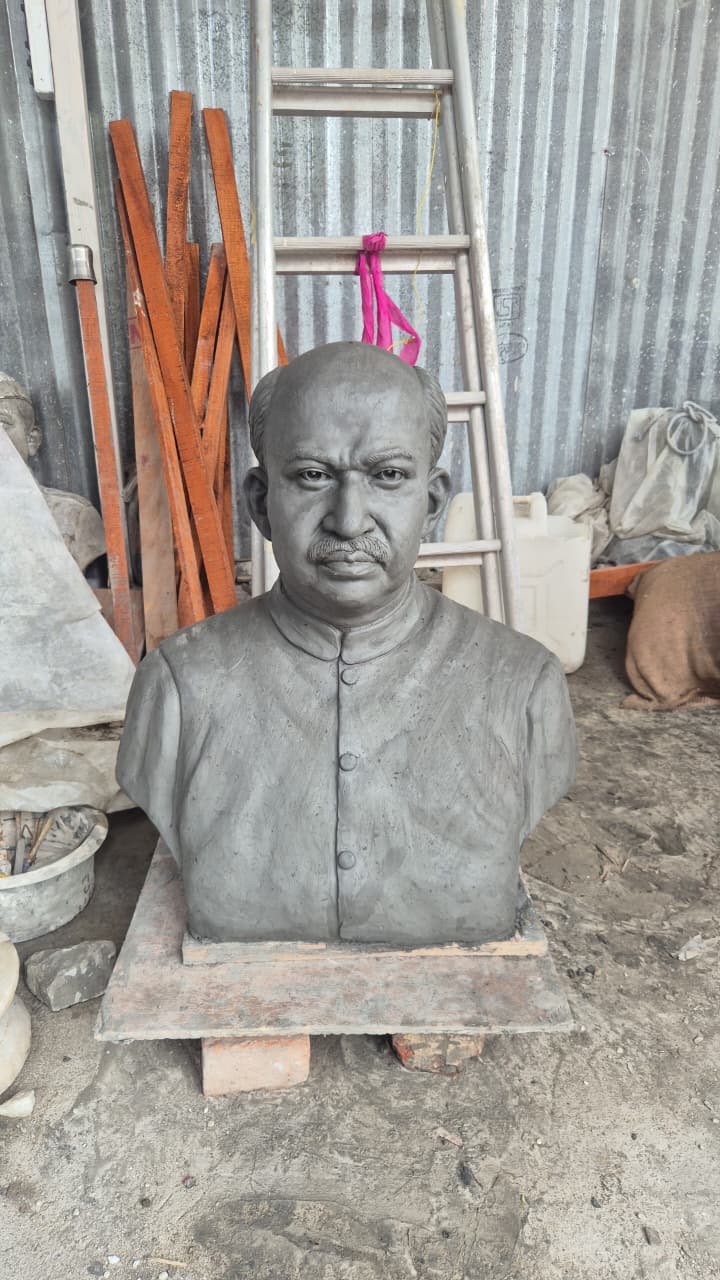
Workshop production
-
Completed export orders
Videos can also demonstrate manufacturing quality and provide customers with greater confidence.
11. Quality Can Become a Major Export Advantage
International customers are not simply buying a religious sculpture. They are investing in a product that needs to survive transportation, installation, festival use and storage.
Manufacturers should therefore focus on:
-
Strong structural construction
-
Consistent fiberglass thickness where appropriate
-
Good surface finishing
-
Durable paint
-
Proper reinforcement
-
Quality fittings
-
Secure packaging
-
Final inspection before dispatch
A documented quality-control process can also help an exporter communicate professionalism to overseas buyers.
12. Reusability Can Be an Important Selling Point
One of the major practical advantages of fiberglass sculptures is their potential for repeated use when properly manufactured, handled and stored.
For organizations that conduct Durga Puja every year, a reusable idol can be considered differently from a single-use traditional clay idol.
After the festival, the sculpture can potentially be stored for future events, subject to the organization's religious practices and event requirements.
This can create a different value proposition for overseas community organizations that face high transportation and procurement costs every year.
13. India's Overall Export Growth Provides a Broader Positive Context
Despite changes in individual markets and trade policies, India's overall export numbers in 2026 show that international trade remains an important growth area.
India's Ministry of Commerce reported estimated total exports of goods and services of US$82.68 billion in August 2026, representing 25.41% growth compared with August 2025. Major merchandise export growth areas included electronic goods, engineering goods, chemicals, cotton yarn and handloom products.
This broader environment demonstrates the importance of Indian businesses developing export capabilities rather than depending exclusively on domestic demand.
For specialized manufacturers such as fiberglass sculpture companies, the opportunity is to identify specific international customer segments and build products and marketing around their requirements.
14. What Indian Fiberglass Durga Idol Manufacturers Should Focus on in 2026
The changing export environment suggests several practical priorities.
1. Diversify target markets
Do not depend exclusively on one country.
2. Build a professional export website
Make it easy for international customers to understand products and request quotations.
3. Invest in product photography
Good visual presentation can significantly improve customer confidence.
4. Provide accurate quotations
Clearly explain product cost, packaging, freight assumptions and other applicable charges.
5. Monitor trade regulations
Tariffs and customs requirements can change. Manufacturers should verify current rules before confirming export prices.
6. Improve packaging
A beautiful sculpture is of little value if it arrives damaged.
7. Offer customization
Different international communities may have different requirements.
8. Build long-term relationships
A Durga Puja organization that purchases successfully once may become a repeat customer for future festivals.
15. The Future of Indian Fiberglass Durga Idol Exports
The international market for Indian fiberglass sculptures is likely to become increasingly connected to digital commerce, international logistics and specialized cultural demand.
Manufacturers who want to expand internationally will need to think beyond manufacturing alone.
The successful export process involves:
Design → Manufacturing → Quality Control → Photography → Digital Marketing → Customer Enquiry → Quotation → Packaging → Documentation → Shipping → Delivery
Every stage influences the customer experience.
For Indian manufacturers, the growing interest in fiberglass Durga idols represents an opportunity to take traditional Indian artistic skills to international communities while using modern materials and export practices.
The key in 2026 is not simply finding more buyers. It is building an export-ready business that can respond to changing tariffs, different market requirements, international shipping challenges and increasingly digital customer journeys.
The changing export landscape for Indian fiberglass Durga idol manufacturers in 2026 presents both challenges and opportunities. Trade policies, tariffs and logistics require exporters to plan carefully, while growing international interest in Indian cultural products creates opportunities in multiple overseas markets.
The latest Indian export data also shows that international trade remains an important part of the country's economic activity.
For fiberglass Durga idol manufacturers, the future can be approached through market diversification, quality manufacturing, professional packaging, customization and strong digital marketing.
Companies that combine traditional artistic expertise with modern export practices can position their fiberglass sculptures for customers not only in India, but also across global markets.
Looking for a fiberglass Durga idol manufacturer and exporter from India? Glasspoll Art can develop customized fiberglass sculptures for religious, cultural and decorative requirements and assist international customers with product discussions and export enquiries.